Business Management Diploma
Knowledge and skills that employers need and want.
Semesters: Spring | Summer | Fall | Winter
- Surrey | Abbotsford | Kelowna Campus
- 960 Hours
- 1 Year
- 60 Credits
Program Overview
Graduates of the business management diploma program develop a solid foundation across core business areas, including accounting, finance, marketing, human resources, and operations. They gain communication, analytical, and research skills, and an understanding of Canadian and global business environments. The curriculum emphasizes ethical decision-making, leadership, business law, including Indigenous perspectives, economics, and data analysis using industry-standard tools and AI. The program concludes with a capstone project featuring mentorship from local business leaders, where students have the opportunity to apply theory to work-world challenges, demonstrating career readiness and effective teamwork.
Course Highlights
Program Duration: 960 instructional hours.
Homework Hours: 720 hours
Durations:
Accelerated Full-Time: Four consecutive terms in 52 weeks (12 months to complete the diploma). 12 weeks per term (5 courses per term) for a duration of 48 weeks of instruction. With 4 weeks of term breaks.
Standard Full-Time: Two term instruction with one full term break (18 months to complete the diploma). 12 weeks of instruction per term (5 courses per term), for a duration of 48 weeks of instruction.
Part-Time (Domestic Students Only): The duration may vary and is dependant on student enrollment choices in the number of courses they will enrol in for each term. The students will have 24 months to complete the diploma part-time. Part-time students have the option to attend classes in all 4 terms offered per year over a 24 month duration (they will not be enrolled in 5 courses per term). Therefore, the 48 weeks of instruction will be spread out over (24 months).
Attendance Expectations: Students are required to maintain their attendance as per the FC attendance policy.
Completion Requirements: A student must score an overall final grade of 60% in each course to progress through the program.
This program has been approved by the Private Training Institutions Regulatory Unit (PTIRU) of the Ministry of Post-Secondary Education and Future Skills. This program is not eligible for PGWP. However, the program has a pathway to PGWP through our partner institution(s). Please contact our Admissions team for more details via 250-861-5808 or admissions@focuscollege.com.
Career Opportunities
- Assistant Manager
- Business Development Assistant
- Business Assistant Manager
- Customer Service Coordinator
- Finance Assistant
- Personal/Executive Assistant
- Assistant Planning Officer
- Purchasing Assistant
- Operations Assistant
- Inventory or Logistics Assistant
- Office Coordinator
- Sales Coordinator
- Marketing Coordinator
Salary Range
Business Development Assistant
Anticipated Salary Range
*This estimate is based on available employment data at the time. Actual salary will be based on numerous factors.
Source: Glassdoor

Course Curriculum
Business Accounting — 48 hours total over 12 weeks (3 months)
This Academic Writing course introduces students to the essential skills required for effective reading and writing at the university level. Students will develop their academic abilities to compose scholarly writing, including incorporating research and documentation in a grammatically correct style.
This course gives students the skills and confidence needed to be an effective communicator in educational and/or business situations. Students focus on the writing process and develop skills to compose organized and coherent writing. Students also learn strategies for critical reading, analytical thinking, and research.
Fundamentals of Business — 48 hours total over 12 weeks (3 months)
This Fundamentals of Business course prepares students for an understanding of how business works in today’s Canadian and global economy. Students learn how the different disciplines of business combine in planning and decision-making within a business. More specifically, this course introduces students to the Canadian business environment from the perspectives of an employee, employer, consumer, and investor.
Professional Development — 48 hours total over 12 weeks (3 months)
This Personal Development course introduces students to fundamental knowledge and skills for personal and professional growth. Students focus on self-awareness and knowledge while gaining skills to support career planning. This course helps students to set and pursue meaningful goals and develop positive personal qualities such as self-esteem, a positive attitude, self-discipline, self-motivation, and emotional self-regulation.
Introduction to Financial Accounting — 48 hours total over 12 weeks (3 months)
This course enables students to gain skills and knowledge to prepare and utilize accounting statements in accordance with Canadian Generally Accepted Accounting Principles (GAAP). Students are introduced to the basics of financial and management accounting, including the accounting cycle, accrual accounting, preparation of financial statements, an overview of financial transactions, cash budgets, and balance sheets. Topics also include receivables, inventory, capital assets, current liabilities, and owners’ equity. of financial transactions, cash budgets, and balance sheets.
Business Ethics and Culture — 48 hours total over 12 weeks (3 months)
This introductory business ethics course equips students with core principles that guide ethical behaviour and decision-making in organizations. Students learn how ethics foster trust, fairness, and reputation beyond legal standards, focusing on leadership, accountability, transparency, and environmental responsibility. The course demonstrates how robust ethics and corporate social responsibility builds a culture of trust and confidence while promoting societal welfare and sustainability. Students will develop and refine their critical thinking and communication skills in ways that can be directly applicable to an ethically focused business environment.
Business Communications — 48 hours total over 12 weeks (3 months)
This Business Communication course provides students with the opportunity to study and practice the skills needed to communicate persuasively, critically, and professionally in the workplace. Students develop skills in using audience-based strategies to produce clear and concise business communication in a variety of forms. Students will also learn skills for networking, meetings, and working in teams. The proper use of business writing rules, referencing, grammar, and etiquette will be emphasized throughout the course.
Managerial Accounting — 48 hours total over 12 weeks (3 months)
This Managerial Accounting course focuses on the use of accounting information to efficiently operate an organization. Students are provided with the fundamental concepts of cost system design, cost behaviour, budgeting, and variance analysis for internal decision making. Students further learn to prepare cash-flow statements while analyzing and interpreting financial statements.
Business Technology Applications — 48 hours total over 12 weeks (3 months)
This Information Technology (IT) course equips students with the knowledge and skills to bridge the gap between computer science and business to make full use of business information systems (BIS). Students explore the theoretical concepts, principles, and software applications, with a focus on using IT tools to address complex information needs, including exploring the use of AI platforms in business. Emphasis is placed on security practices and user considerations while students gain a theory-based overview of hardware, software and computer fundamentals.
Introduction to Marketing — 48 hours total over 12 weeks (3 months)
This course introduces fundamental marketing concepts and practices within contemporary organizational environments. Students identify key marketing roles and functions, describe consumer behaviour and basic market research principles, and explain foundational sales and product strategies. The course introduces artificial intelligence supported e-commerce and related marketing technologies, enabling students to recognize how data, digital tools, and ethical considerations inform customer analysis, value communication, brand development, and organizational decision-making.
Leadership in Business — 48 hours total over 12 weeks (3 months)
This comprehensive foundational leadership course is designed to introduce the core theories, skills, and practices that define effective leadership in contemporary organizations. Students will examine various leadership styles, incorporate ethical decision-making, and strategies for motivating and guiding teams, with a focus on cultivating emotional intelligence, communication, and conflict resolution abilities. The curriculum emphasizes real-world applications through case studies and interactive activities, helping students develop the confidence and competence required to excel as leaders in diverse business environments. Students will be equipped to inspire trust, drive performance, and contribute to a positive organizational culture, preparing them for successful careers in management and leadership roles.
Human Resource Management — 48 hours total over 12 weeks (3 months)
This Human Resource Management (HRM) course provides students with an overall understanding of the vital role human resources (HR) plays in an organization. Students are introduced to the key cycles and responsibilities of human resources while focusing on effective employee deployment and development.
Business Data Analytics — 48 hours total over 12 weeks (3 months)
Good business decisions are often based on accurate data analysis. This Data Analysis course introduces students to statistical methods, concepts, and their applications to economic data using spreadsheets. Using industry-standard software, students also learn spreadsheet terminology and concepts; create formulas and functions; use formatting features; and generate charts, graphs, and reports. Emphasis is placed on applying real data, advanced technologies, such as AI driven data analysis, and statistical analysis techniques to address complex business challenges to promote informed, evidence-based decision-making.
Organizational Behaviour — 48 hours total over 12 weeks (3 months)
Organizational Behaviour (OB) examines how individuals and groups behave within organizations and how this impacts performance, productivity, and workplace culture. This course introduces students to key concepts such as motivation, leadership, communication, group dynamics, organizational culture, decision-making, and change management.
Business Law — 48 hours total over 12 weeks (3 months)
This Business Law course introduces students to the fundamentals of the Canadian legal system, including legal and administrative systems, torts, negotiable instruments, forms of business organizations, credit transactions, and explore Aboriginal Law and indigenous rights in relation to legal frameworks of Canada. Students will learn how to create contracts and mitigate contract breaches and discover various ways to resolve contractual or employment-related disputes.
Operations Management — 48 hours total over 12 weeks (3 months)
This Operations Management fundamental course enables students to recognize and evaluate effective management strategies and efficiency tactics in the business and work environment. Students learn the skills to attain standards for leadership, teamwork, and managerial skills, forecasting and tracking, and capacity planning at the operational and management levels. They will explore elements of logistics and supply chain management to enhance their understanding of product management. Students will also perform qualitative and quantitative assessments to analyze and strategize an organization’s ever-changing business environment.
Business Financial Operations — 48 hours total over 12 weeks (3 months)
This course introduces students to the essential financial operations that drive business decision-making. It explores the flow of financial information within organizations, focusing on budgeting, cost management, working capital, payroll, accounts receivable/payable, and financial controls. Students will learn how to interpret and apply financial data to support business operations, ensure compliance, and contribute to profitability and sustainability.
Practical emphasis is placed on real-world financial processes, the preparation of financial reports, and the analysis of operational performance. By the end of the course, students will be able to connect financial activities with overall business strategies and operational efficiency.
Economics: Macroeconomics — 48 hours total over 12 weeks (3 months)
This Macroeconomics course enables students to examine global economics and how national economies operate. The principles of macroeconomics analysis with special reference to business cycles analyses of fluctuations in income and prices, monetary and fiscal policies for economic stabilization. This course also analyses the principles that govern trade relations among countries.
Economics: Microeconomics — 48 hours total over 12 weeks (3 months)
This Microeconomics course introduces students to the concepts of economics that include markets and market behaviour. Students gain analytical skills to identify opportunities, market structures, and government intervention. This course helps students examine economic trends, the role of prices and competitive markets in the allocation of resources, and market behaviour. This course is designed with the emphasis on the business environment and the Canadian economy.
Business Statistics — 48 hours total over 12 weeks (3 months)
This Business Statistics course introduces students to essential statistical concepts and descriptive statistics used in business. It equips students with the knowledge and skills to apply statistical and graphical techniques to solve business problems using appropriate software tools. Students will be introduced to several discrete and continuous probability distributions. Upon completion, students will be able to explain data collection techniques, linear regression, as well as analyze and interpret data to produce forecasts, and perform hypothesis testing.
Business Capstone — 48 hours total over 12 weeks (3 months)
The Business Capstone course is the culminating experience and consolidation of learning for the Business Management diploma program. It allows students to integrate, consolidate all previous course learning and apply their knowledge from core disciplines: management, marketing, finance, leadership, operations, and human resources into a comprehensive real-world business problem or project. The Business Capstone course applies work integrated learning through mentorship and work-world scenarios.
Students will be mentored individually or in teams by a local company, leader or professional in analyzing a simple business problem, develop strategic recommendations, and present their findings to their mentors, instructor and class. The course emphasizes critical thinking, research, teamwork, professional communication, and the ability to apply theory to practice. By the end of the course, students will demonstrate career-readiness by producing a business report and professional presentation that showcases their applied knowledge and skills.
Admission Requirements
- Minimum Grade 12 or Equivalent Canadian qualification or
- Relevant experience (minimum of 3 years’ experience in the program’s applicable career occupations) or
- Mature Students (minimum 19 years of age before the first day of classes ).
- There are no course prerequisite(s) needed for admittance to the program.
One of the English language proficiency options listed below need to be fulfilled.
Option 1: Evidence that 3 years of full-time secondary education (Grades 8-12), or 2 years if the Grades are 10, 11 or 12, have been successfully completed in the program’s language of instruction in a country where the language of instruction is one of the principal languages.
Applicants must produce transcripts as evidence of completion (high school transcripts, completion of BC Adult Graduation Program or providing international education credentials recognized through WES, ICES or IQAS)
Option 2: 2 years of full-time post-secondary education* have been completed in the program’s language of instruction in a country where the language of instruction is one of the principal languages (includes international education credentials recognized through WES, ICES, or IQAS).
*Language development courses (e.g. ELL courses) cannot be included in this calculation.
Option 3: Where English is the program’s language of instruction, evidence of achievement in a recognized standardized language test/assessment* at an overall level equivalent to IELTS 6.0 (academic) or higher.
All accepted language tests/assessments must be listed with a minimum score/level specified for each. ‘Or equivalent’ will not be accepted.
Language tests must include assessments of reading, writing, listening, and speaking
Assessment Options: Verified results must be provided for one of the Standardized English language proficiency tests listed below:
- International English Testing (IELTS) Academic: Minimum overall score of 6.0
- Test of English as a Foreign Language (TOEFL) IBT: Minimum overall score of 67 (TOEFL-Home test not accepted).
- Canadian English Proficiency Index Program (CELPIP): Listening 7, Speaking 7, Reading 7, and Writing 7
- Duolingo English Test: Minimum overall score of 105
- Pearson Test of English (PTE) Academic: Minimum overall score of 52
Option 4: Accuplacer
This option can only be applied when:
- English is the program’s language of instruction, and
- The applicant is a mature domestic student facing barrier, and
- The applicant cannot access their educational records or cannot provide sufficient evidence of secondary or post secondary education as outlined in the language proficiency requirement.
Requirements: - Applicant is 19 years or older at the start of the program and is a Canadian citizen or permanent resident, and
- Applicant provides attestation that they have completed at least three years of full-time instruction is a country where English is one of the principal languages, and
- Applicant completes an Accuplacer English Assessment (Next generation: Reading, Writing, and WritePlacer) and achieves the following minimum scores:
- Reading: 230, and
- Writing: 230, and
- WritePlacer: 4
See full English Language Proficiency Requirements for details.
- Reliable high‑speed internet and a device capable of running online‑class software (e.g., Microsoft Teams)


Program Fees
- Tuition Fee: $28,500
- Application Fee: $250
- Administrative Fee: $200
- Textbooks: $800
- Software Licensing: $200
- Archive Fee: $50
- Total Fees: $30,000*
*Domestic students may qualify for financial aid or Focus College scholarships. Complete the application form or visit our Financial Assistance page to learn more.
- Tuition Fee: $28,500
- Application Fee: $250
- Administrative Fee: $200
- Textbooks: $800
- Software Licensing: $200
- Archive Fee: $50
- Total Fees: $30,000
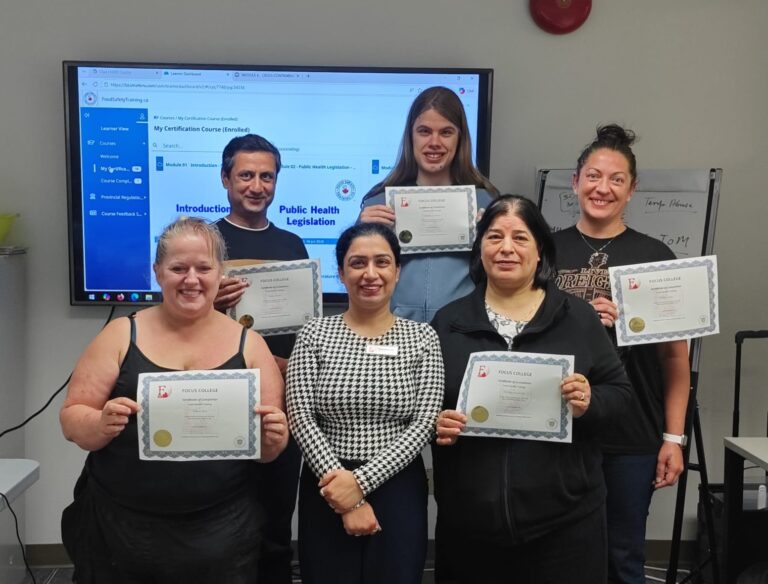
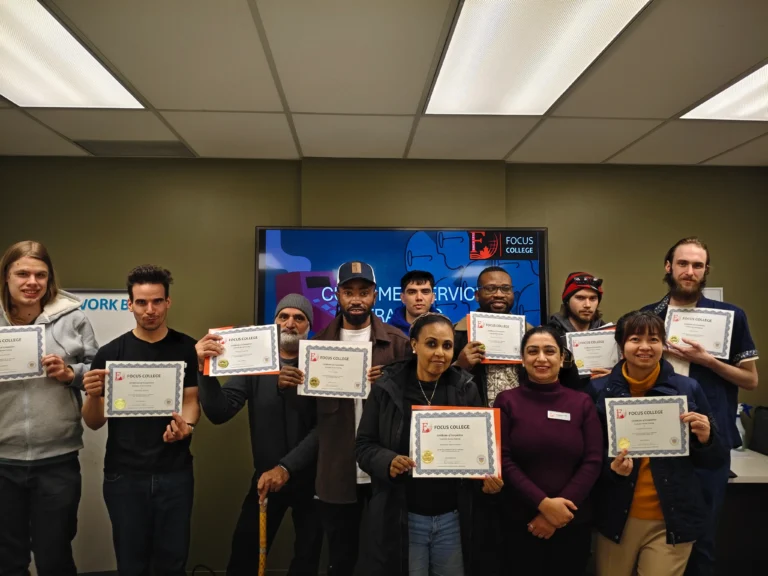
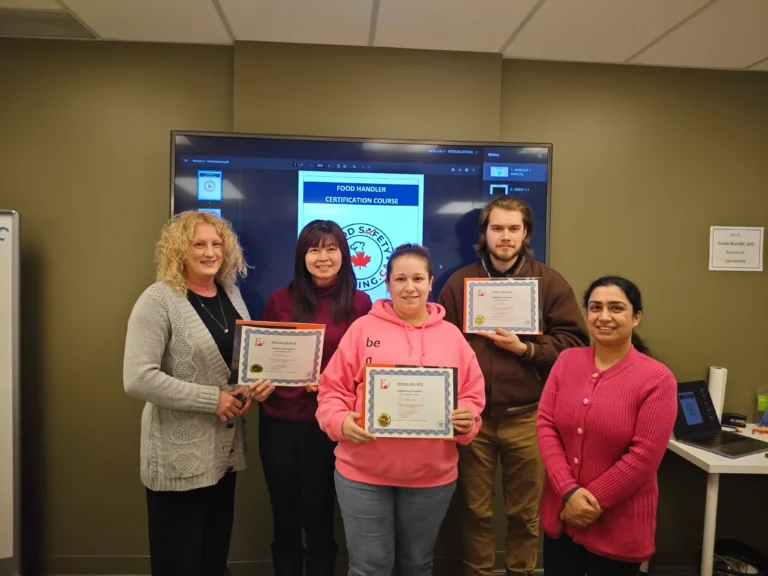
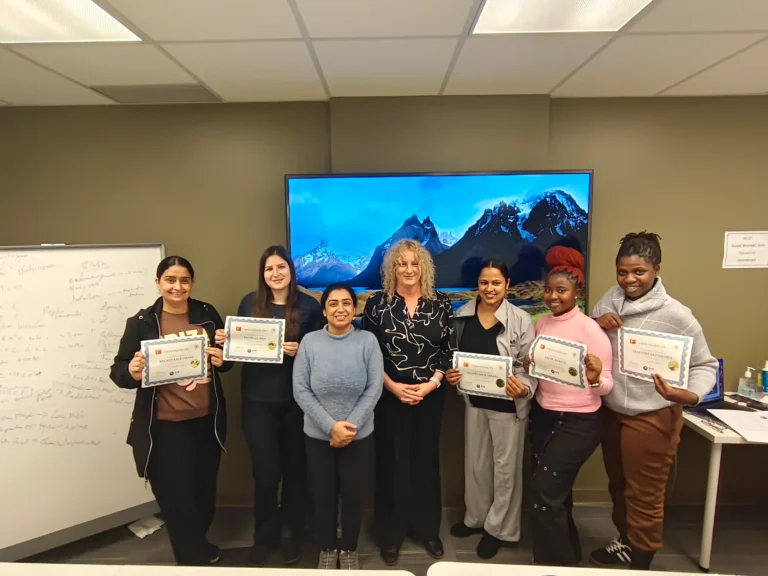
Student Success Stories
Posted on Google
 Danish Veer Singh15 April 2026
Trustindex verifies that the original source of the review is Google.
College is very awesome specially the teachers and staff was very nice specially the arvind mam was very helpful and very nice and the focus college is very nicePosted on Google Shruti Shruti15 April 2026Great faculty, supportive staff, and a very practical learning environment ..highly recommended! 👍Posted on Google
 Kirandeep Kaur Sidhu14 April 2026Arvind ma’am is truly amazing. She is extremely helpful, supportive, and kind. I had a great experience and really appreciate her guidance. Highly recommended!Posted on Google
 ILYN LEE21 March 2026Our instructor is enthusiastic her goal was her students learn more a lot and gain more knowledge.Posted on Google
 A K17 March 2026Amazing experience at Focus College,all instructors ,staff are helpful .Posted on Google
 Amrit Grewal17 March 2026My experience at this college has been good overall. The teachers are helpful, and the environment is suitable for studying. The college is strict about attendance, which helps students stay disciplined.Posted on Google
 Harman Singh17 March 2026Every profession is very helpful.Posted on Google
 Sandeep Kaur17 March 2026My experience at Focus College has been very positive. The faculty members are knowledgeable and dedicated to student success. The curriculum is well-structured and focuses on practical learning. Additionally, the staff is approachable and supportive. I would highly recommend Focus College to prospective students.